.svg)
Newt fencing is a specialist environmental protection measure designed to safely manage and protect great crested newts and other amphibians during construction or development projects. It creates a controlled barrier that prevents newts from entering active work areas, ensuring compliance with UK wildlife legislation while safeguarding habitats.
.svg)
At Gradwell Habitat Management, we provide specialist newt fencing solutions across the UK, helping developers, builders, and landowners stay compliant with wildlife legislation. Our expert team designs and installs both temporary and permanent newt fencing to protect great crested newts and other amphibians during construction projects.
Great crested newts are a European Protected Species, which means that harming them or disturbing their habitats can result in prosecution and serious delays to construction work.
By installing newt fencing, you can prevent these species from entering active development areas, reducing the risk of harm while also protecting your project from legal and financial setbacks.
Beyond compliance, the presence of properly installed fencing demonstrates a genuine commitment to sustainable development and responsible land management.

%20(1).png)
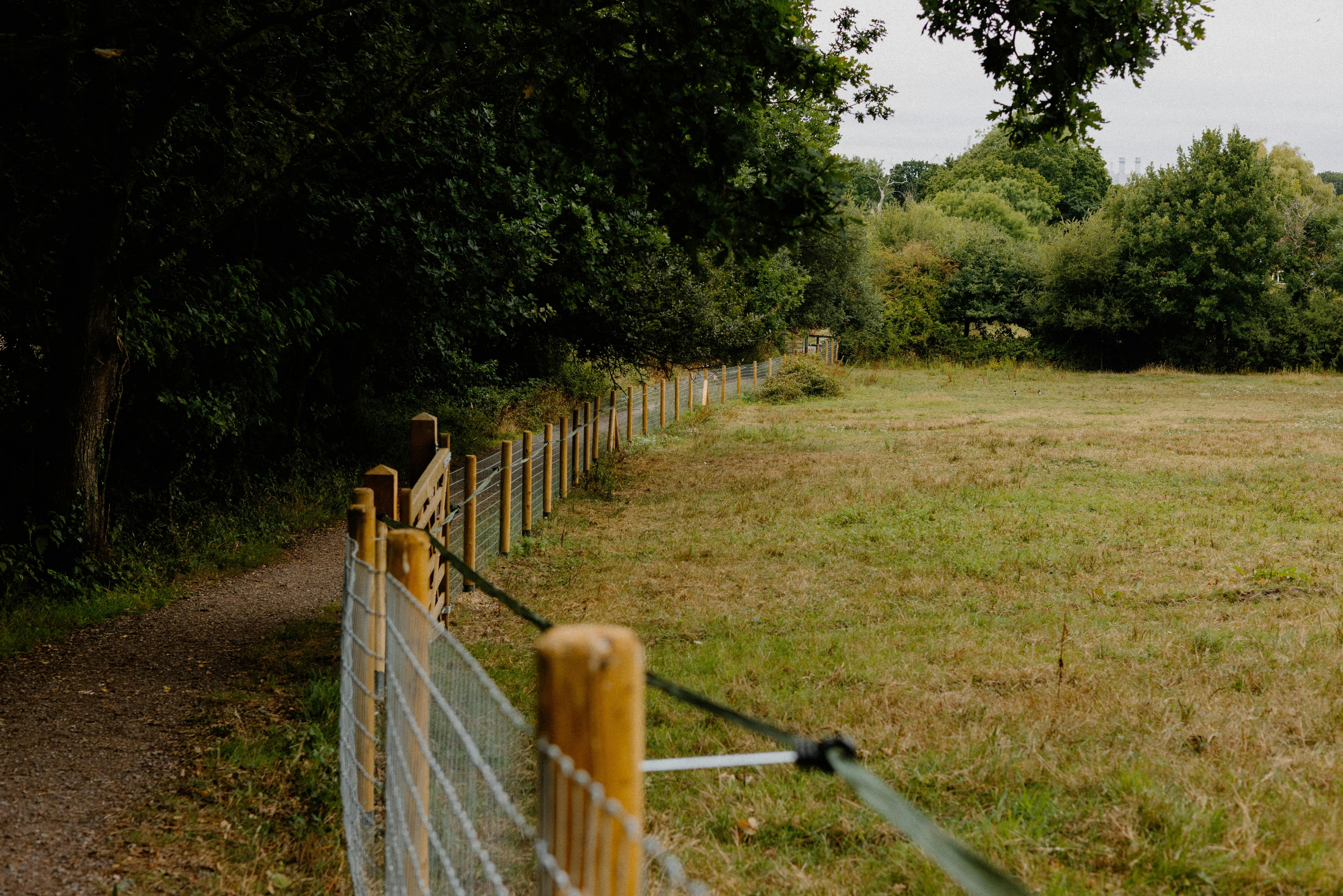
Permanent newt fencing is a long-term solution designed to provide lasting protection for great crested newts and their habitats. Unlike temporary systems, which are used during short-term construction projects, permanent fencing is installed when there is an ongoing need to keep newts safely away from certain areas of land.
This type of fencing is often used around large developments, industrial sites, or locations where habitat fragmentation needs to be carefully managed for the long term.
At Gradwell Habitat Management, we supply and install permanent newt fencing that is built to withstand weather, time, and site conditions.
The fencing is constructed from durable materials and is installed to Natural England specifications, ensuring full compliance with wildlife legislation. Once in place, permanent fencing offers peace of mind that your project remains protected and legally sound well into the future.
Permanent newt fencing is particularly valuable for developments close to ponds, wetlands, or known breeding grounds, as it ensures newts cannot return to hazardous areas after the completion of works. By creating a secure barrier, it protects both the species and your investment, reducing the risk of legal challenges or costly enforcement action.
If your project requires a robust and legally compliant long-term solution, our expert team can assess your site, provide tailored recommendations, and deliver a fencing system that meets both ecological and development needs.
.svg)
Semi-permanent newt fencing is the ideal choice for developments that extend over a longer timeframe but don’t require a permanent barrier once construction is complete. This fencing type provides reliable protection for great crested newts during multi-phase or extended projects, ensuring that your site remains compliant with Natural England licensing requirements throughout the build.
Unlike lightweight temporary fencing, semi-permanent newt fencing is more robust and designed to withstand varying weather conditions over several months or even years. It is often constructed using stronger materials, such as HDPE sheeting or reinforced geotextiles, which are securely fixed into the ground to prevent newts from entering active work zones.
At Gradwell Habitat Management, our semi-permanent fencing solutions are tailored to the specific needs of your site. They offer the flexibility to keep habitats protected for the duration of a project while still being removable once the work has been completed. This makes them a cost-effective and practical option for developers who need protection that lasts longer than temporary fencing but do not wish to commit to a fully permanent system.
By choosing semi-permanent newt fencing, you ensure that your project continues smoothly without the risk of ecological breaches or legal delays. Our experienced team will advise on the right system for your development, install it to the highest standards, and ensure it remains effective for the required duration.
.svg)
.webp)
.webp)
Temporary newt fencing is designed for short-term developments and construction projects where amphibians need to be safely excluded from active work areas. This type of fencing provides a quick, effective, and legally compliant way to protect great crested newts and other amphibians during the early phases of site clearance, groundwork, and building activities.
Typically made from lightweight polythene sheeting, temporary newt fencing is supported by stakes and securely fixed into the ground to form a barrier that prevents newts from moving into dangerous zones. It is ideal for projects lasting a few weeks or months, and it can be easily removed once the ecological risk has passed or mitigation measures are complete.
At Gradwell Group, our temporary fencing installations are carried out in line with Natural England guidelines, ensuring that your project remains fully compliant with wildlife legislation. We work quickly and efficiently to set up protective fencing, keeping your development on schedule while safeguarding sensitive habitats.
Temporary newt fencing is often the first step in a wider mitigation strategy. It allows ecologists to safely trap and relocate newts, carry out surveys, or manage habitats while construction begins. For developers, this provides peace of mind that the project can proceed responsibly without risking legal or financial penalties.
If your site requires short-term ecological protection, our expert team can supply and install temporary newt fencing that meets your project’s specific requirements.
.svg)
If your development requires ecological mitigation, our team is ready to help. From the initial consultation through to installation, we guide you through every stage of the process, making sure that your newt fencing solution is tailored to your site’s needs.
Get in touch with us today for a free consultation and a competitive quote.
At Gradwell Habitat Management, we provide specialist newt fencing solutions across the UK, helping developers, builders, and landowners stay compliant with wildlife legislation.
From large-scale conservation sites to private estates and farmland



